
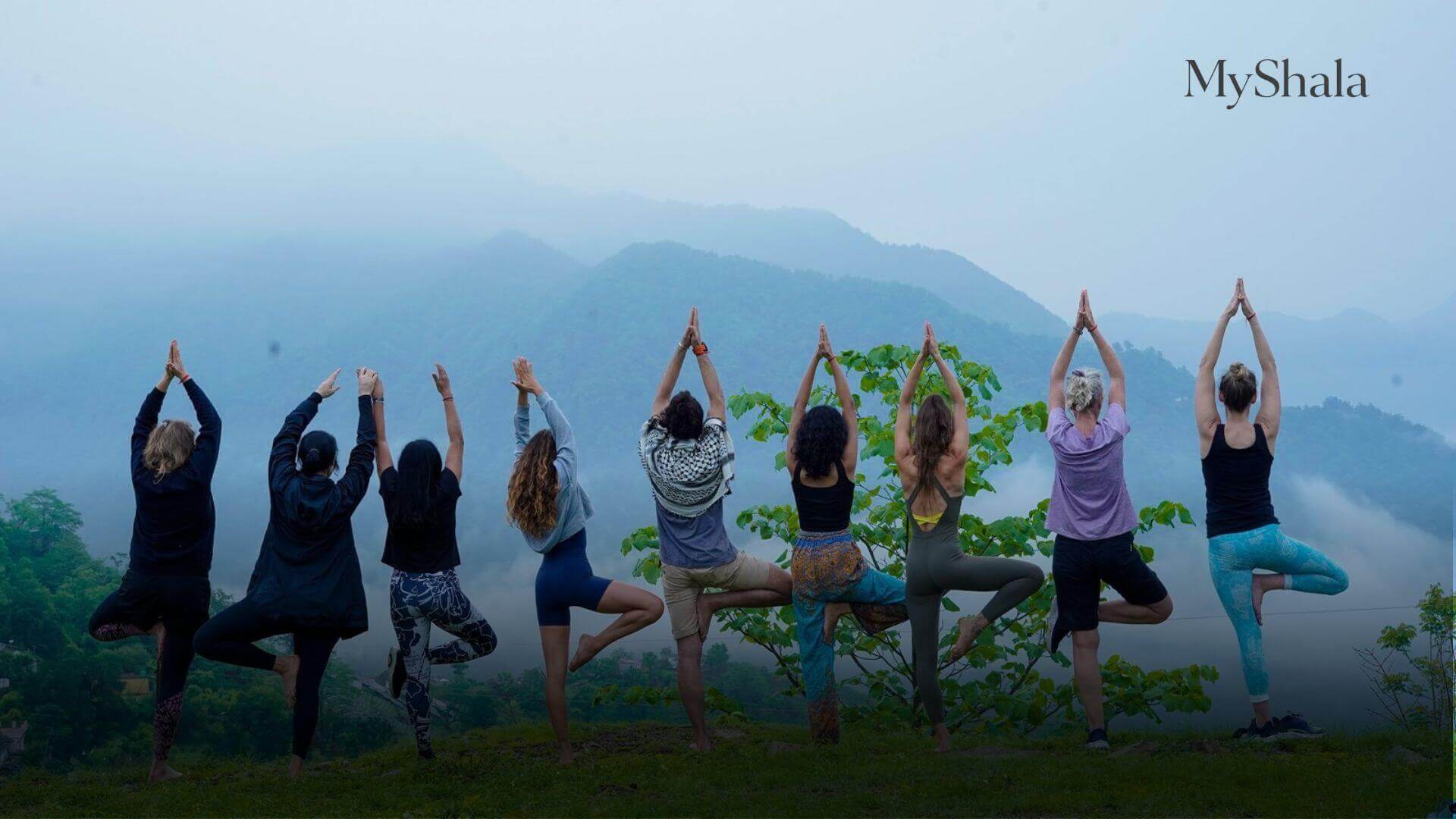
Rishikesh is an initiation. For your students, it is the dream: chanting by the Ganges, meditating in Vashistha’s Cave, and practicing asana in the foothills of the Himalayas. It is the "Yoga Capital of the World," and bringing a group here is a career-defining milestone for any Western teacher.
But for you—the host—Rishikesh can quickly become a logistical nightmare.
India operates on "organized chaos." While that energy is spiritually potent, it is terrible for business operations. A retreat leader’s worst fear is arriving with 15 high-paying students to find the "river-view resort" they booked online is actually next to a noisy construction site, the WiFi doesn't work, and the promised vegan menu is doused in ghee.
As the founder of MyShala, I live here. I navigate this chaos daily so you don't have to. In this guide, I will break down exactly how to host a seamless yoga retreat in Rishikesh, manage logistics, and ensure your students have a life-changing experience for all the right reasons.
The "Trust Gap": Why Instagram vs. Reality is Dangerous
If you have tried to book premium yoga halls in India from abroad, you have likely relied on Instagram photos and Booking.com reviews. In Rishikesh, this is a dangerous game. The digital landscape here suffers from what I call the "Trust Gap."
- The Wide-Angle Lie: A hotel might show a serene balcony view of the Ganges. What the wide-angle lens hides is the new hotel being built three feet away, complete with drilling from 8 AM to 6 PM.
- The WiFi Reality: Almost every cafe in Tapovan claims to have "High-Speed WiFi." In reality, this often means a shared dongle that crashes the moment three people try to upload a Reel. For a teacher who needs to check in with family or run a business, this is unacceptable.
This is why physical verification is non-negotiable. You need feet on the ground to check the water pressure, test the internet speed, and listen for noise levels at different times of the day.
Location Battle: Where Should You Host?
Rishikesh is not just one town; it is a collection of distinct districts, each with a radically different vibe. Choosing the wrong one can mismatch your retreat’s energy.
1. Tapovan: The Modern Hub (Best for Comfort & Amenities)
If your group expects oat milk lattes, reliable fiber internet, and boutique accommodation, Tapovan is your best bet.
- The Vibe: Trendy, international, and convenient.
- Pros: Highest concentration of high-end yoga halls, organic vegan cafes, and English-speaking staff.
- Cons: Can be busy near the main road.
- MyShala Tip: Look for venues in "Upper Tapovan." You get the stunning mountain views and silence, but you are just a 10-minute walk from the cafe culture.
2. Ram Jhula: The Spiritual Core (Best for Traditional Lineage)
- The Vibe: Serious, devotional, and quieter.
- Pros: Home to legendary ashrams like Parmarth Niketan. Direct access to the evening Ganga Aarti. Strictly vegetarian and alcohol-free zone.
- Cons: Accommodation is often more basic/ascetic. Fewer "resort-style" amenities.
- Best For: Serious meditation groups or teacher trainings (TTCs) focused on philosophy.
3. Laxman Jhula: The Social Center
- The Vibe: Vibrant, musical, and eclectic.
- Pros: Great river views and a very social atmosphere.
- Cons: The bridge area is a bottleneck of traffic and noise. It is often too chaotic for a retreat that requires deep introspection.
💡 The Money Question:
"How much does it actually cost?" This is the #1 question I get. Below is a breakdown of realistic costs for 2026.
The Cost Breakdown: Yoga Venue Rental Costs
To make a profit while offering a premium experience, you need to understand the tiers. Here is a realistic cost breakdown for 2026 (prices are per student, per day, including 3 vegetarian meals and accommodation):
- Budget Tier ($25 - $40 USD): Basic guesthouses. Non-AC rooms, shared bathrooms, simple dal/rice meals. Risk: Hygiene standards may vary.
- Mid-Range / Verified Standard ($50 - $80 USD): Private rooms with AC, attached modern bathrooms, dedicated yoga shala access, and expansive buffet meals. This is the sweet spot for most international retreats.
- Premium / Resort Tier ($100 - $150+ USD): Spa facilities, swimming pools, river-facing suites, concierge service, and premium organic catering.
The Profit Potential
If you book a Mid-Range venue at $65/day for a 7-day retreat, your base cost per student is $455. If you charge your student $1,800 (a standard Western market rate for India), your gross margin is $1,345 per student. With a group of 12, that is a revenue of over $16,000 for one week of work.
The Logistics Checklist: Avoiding the Nightmare
Booking the venue is only half the battle. Retreat planning logistics in India requires military precision.
1. The Airport Transfer (Dehradun vs. Delhi)
Do not tell your students to fly into Delhi and take a taxi. The drive is 6-8 hours and can be harrowing for first-timers.
- The Fix: Instruct them to book a connecting flight from Delhi (DEL) to Dehradun (DED). It is a 45-minute flight.
- The "Taxi Mafia": Taxis at DED airport can be aggressive. Pre-book a private driver for your group who will wait with a placard. It costs slightly more but sets a tone of safety instantly.
2. The Food: "Sattvic" Not "Boring"
Western stomachs can be sensitive. A week of "Delhi Belly" will ruin your retreat reviews.
- The Requirement: Ensure your venue uses filtered water for everything (including washing vegetables).
- Dietary Needs: Gluten-free and Vegan are common in the West but can be confusing in traditional Indian kitchens (where ghee and wheat chapatis are staples). You need a kitchen team that understands these distinctions clearly.
3. Payments and Money
India’s banking system (UPI) is incredibly advanced but closed off to foreigners without an Indian bank account. Most venues ask for a bank transfer deposit, which Western banks often block due to "fraud alerts," or fees eat up 10% of your money.
The Solution: Use a logistics partner (like MyShala) that accepts payments in USD/EUR via Stripe or Wise and handles the local vendor payments for you.
Conclusion
India calls to the soul, but it tests the patience. As a retreat leader, your job is to hold space for your students' transformation, not to argue with a taxi driver about a fare or fix a broken generator at 2 AM.
By choosing the right location, understanding the real costs, and securing a trusted logistics partner on the ground, you can host a retreat that is not only spiritually profound but professionally flawless.
Ready to plan your 2026 retreat? MyShala is here to be your eyes and ears on the ground. Check out our Venues Page to see verified spaces or Contact Us for a free consultation.